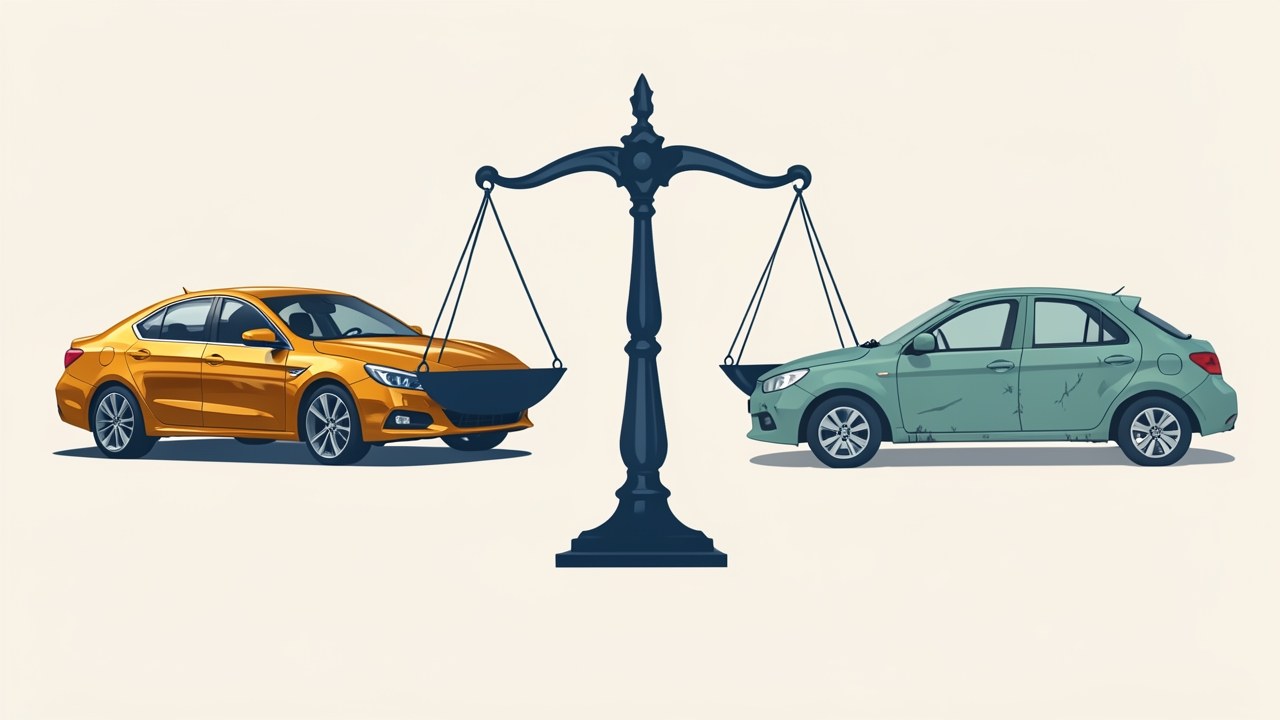
Why Rates Differ Between New and Used Cars
New cars typically come with lower interest rates compared to used cars. Lenders see new vehicles as less risky collateral because they hold their value longer and are less likely to have mechanical issues soon after purchase. On the other hand, used cars are harder for lenders to value and have a higher chance of needing repairs, making them a riskier bet.
The difference in rates can be significant. According to Experian data from Q1 2026, the average APR for a new car loan was 6.39%, while the average for a used car loan was 11.43%. That's a spread of over five percentage points, which can translate into thousands of dollars in extra interest over the life of a loan.
Vehicle age is a critical factor in loan pricing. A used car's age and mileage can affect your ability to secure a loan, and lenders often adjust rates based on those factors. As the Federal Reserve notes, used cars are riskier collateral, so lenders charge higher rates to compensate for that risk.
Sources: Experian, Equifax, Capital One, Federal Reserve
Average Rate Comparison: New vs Used
The table below breaks down key averages for new and used car loans based on Experian data from the first quarter of 2026. Keep in mind that these are national averages, and your actual rate will depend on your credit score, lender, and other factors.
The average loan amount is also notably higher for new cars: $43,925 compared to $27,070 for used cars. This, combined with the rate difference, means the average monthly payment for a new car loan was $770 versus $531 for a used car loan.
Loan terms are similar, with new car loans averaging 69.48 months and used car loans averaging 67.73 months. A longer term can lower your monthly payment but also increases the total interest paid over time, according to the CFPB.
| Metric | New Car Loans | Used Car Loans |
|---|---|---|
| Average APR | 6.39% | 11.43% |
| Average Loan Amount | $43,925 | $27,070 |
| Average Monthly Payment | $770 | $531 |
| Average Loan Term | 69.48 months | 67.73 months |
Sources: Experian, Consumer Financial Protection Bureau
vehicle age on rates
Vehicle age is a primary driver of the rate difference between new and used cars. Lenders view used cars as riskier because they are harder to value and more likely to have mechanical problems. This risk is passed on to the borrower in the form of higher interest rates.
Additionally, the ability to secure a used car loan may depend on the vehicle's age and mileage. Some lenders may have stricter requirements for older or high-mileage vehicles, further limiting your options and potentially leading to higher rates.
The Federal Reserve's data from 2023 shows that 80% of new vehicles and 38% of used vehicles were financed with either a loan or a lease in the first half of 2023. This difference in financing rates reflects the broader availability of loans for new cars compared to used cars.
Sources: Equifax, Capital One, Federal Reserve
Depreciation and Its Effect on Loan Terms
Depreciation affects both the value of the car and the risk to the lender. New cars lose 20-30% of their value in the first year, according to Equifax and People Driven Credit Union. This rapid depreciation means that if you put down a small down payment, you could end up owing more than the car is worth—a situation known as being “upside down” on your loan.
Used cars, on the other hand, have already experienced their steepest depreciation, so they lose value at a slower pace. This reduces the risk of negative equity, which can be a benefit for buyers. However, lenders still charge higher rates on used cars because they are riskier collateral overall.
When considering a new car, you might be tempted by the lower interest rate, but the faster depreciation can offset some of those savings. A used car might have a higher APR, but the lower purchase price and slower depreciation can make it a more financially sound choice for some buyers.
Sources: Equifax, People Driven Credit Union
How to Choose Between New and Used Based on Rates
Choosing between a new and used car loan depends on your budget, how long you plan to keep the car, and your tolerance for monthly payments. New cars usually come with lower interest rates, but the higher purchase price and rapid depreciation can mean you owe more than the car is worth early in the loan.
This can result in a lower overall loan balance and potentially lower total interest paid, even at a higher APR.
Consider your credit score. With excellent credit (781+), the average APR for a new car loan was 4.55% compared to 6.30% for a used car in Q1 2026, according to Experian. For subprime borrowers (501-600), the gap widens: 13.44% for new vs 19.42% for used. A lower rate on a new car might be worth it if you have strong credit and plan to keep the car for a long time.
Also, think about manufacturer incentives. Captive finance companies, which are subsidiaries of auto manufacturers, may offer deals like zero-percent interest or cash back on new vehicles. These promotions can make new cars more attractive in some cases.
- If you have strong credit and want the lowest possible APR, a new car loan may be appealing.
- If you want to avoid the risk of negative equity, a used car with slower depreciation could be safer.
- Compare total interest paid over the loan term, not just the monthly payment.
- Check for manufacturer incentives on new cars that could lower the effective rate.
Sources: Experian, Federal Reserve
Tips for Getting Competitive Rates on Used Cars
Even though used car loans generally carry higher rates, you can take steps to secure a more competitive offer. Here are some strategies supported by industry sources:
One key factor is your credit score. Borrowers with higher scores qualify for lower rates, so it's wise to review your credit report and correct any errors before applying.
Consider shopping around. Rates can vary significantly between banks, credit unions, internet lenders, and dealerships. Federal Reserve research found that consumers who financed a used car from a dealership were more likely to pay double-digit interest rates (10% of such loans) than those using banks, credit unions, or internet lenders (5% of such loans).
Be aware of dealer markup. According to the CFPB, the interest rate you receive through a dealer may be higher than the 'buy rate' because dealers can add a markup to compensate for facilitating the loan. You can negotiate this markup or bring your own financing from another lender.
Consider a larger down payment. While not explicitly shown in the data, a larger down payment reduces the loan amount and can sometimes help you secure better terms from a lender.
Also, keep the loan term reasonable. A longer term (e.g., 84 months) increases the total interest paid, as the CFPB explains with a clear example. Opt for the shortest term you can comfortably afford.
- Check your credit score and report before applying.
- Shop around among banks, credit unions, and online lenders.
- Avoid dealer financing if you can't negotiate a rate near the buy rate.
- Make a larger down payment to reduce the loan amount.
- Choose a shorter loan term to minimize total interest costs.
Sources: Experian, Consumer Financial Protection Bureau, Federal Reserve
Side-by-side category
The table below summarizes the key differences between new and used car loans across important categories. Use it as a quick reference when comparing your options.
| Category | New Car Loans | Used Car Loans |
|---|---|---|
| Average APR (Q1 2026) | 6.39% | 11.43% |
| Average Loan Amount | $43,925 | $27,070 |
| Average Monthly Payment | $770 | $531 |
| Depreciation | 20-30% in first year | Slower depreciation after initial drop |
| Loan Availability | Widely available, including lower interest rates | Availability may depend on age/mileage; higher rates |
| Typical Lender Programs | Captive finance companies may offer incentives like 0% APR or cash back | Non-captive finance companies tend to serve subprime borrowers with higher rates |
Sources: Experian, Capital One, Equifax, Federal Reserve
Frequently asked questions
Are used car loan rates always higher than new car rates?
In general, yes. Used car loans carry higher interest rates than new car loans because lenders view used cars as riskier collateral. According to Experian data from Q1 2026, the average APR for a new car loan was 6.39%, while a used car loan averaged 11.43%. This gap holds true across credit tiers, though the difference can vary. For example, with excellent credit (781+), the average new car APR was 4.55% vs 6.30% for used; with subprime credit (501-600), the rates were 13.44% for new and 19.42% for used.
Sources: Experian, EquifaxCan I get a lower rate on a used car if I have a large down payment?
A large down payment can reduce the loan amount and the lender's risk, which may help you get a better rate. Lenders primarily base rates on your credit score and the vehicle's characteristics, such as age and mileage. A larger down payment can lower your monthly payment and reduce the chance of negative equity, but the rate itself may still be higher than a new car loan. To get the best rate, focus on improving your credit score and shopping around multiple lenders.
Do manufacturer incentives affect used car rates?
Manufacturer incentives, such as zero-percent interest or cash back, are typically offered on new vehicles through captive finance companies, which are subsidiaries of auto manufacturers. These incentives can lower the effective rate on a new car, but they do not directly apply to used cars. Used car rates are set by the lender based on the vehicle's age, condition, and your creditworthiness.
Sources: Federal ReserveHow much difference does a point of APR make on a used car loan?
A single percentage point difference in APR can significantly affect the total interest paid. The CFPB explains that a longer loan term results in lower monthly payments but substantially more total interest. The exact impact varies based on the loan amount and term, but even a small rate reduction can save you hundreds of dollars. Shopping around for the best rate is worth the effort.
Sources: Consumer Financial Protection BureauSources
- Auto Loan Rates and Financing for 2026 — Experian
- Differences Between Financing a New vs. Used Car — Capital One
- Comparing Auto Loans: New Car Loans vs Used Car Loans — Equifax
- New vs. Used Cars: Which Auto Loan is Right for You? — People Driven Credit Union
- The Fed - Consumer & Community Context - November 2023 — Federal Reserve
- How do I compare auto loan offers? — Consumer Financial Protection Bureau
- Automobile Purchase Decisions and Auto Lending — Federal Reserve