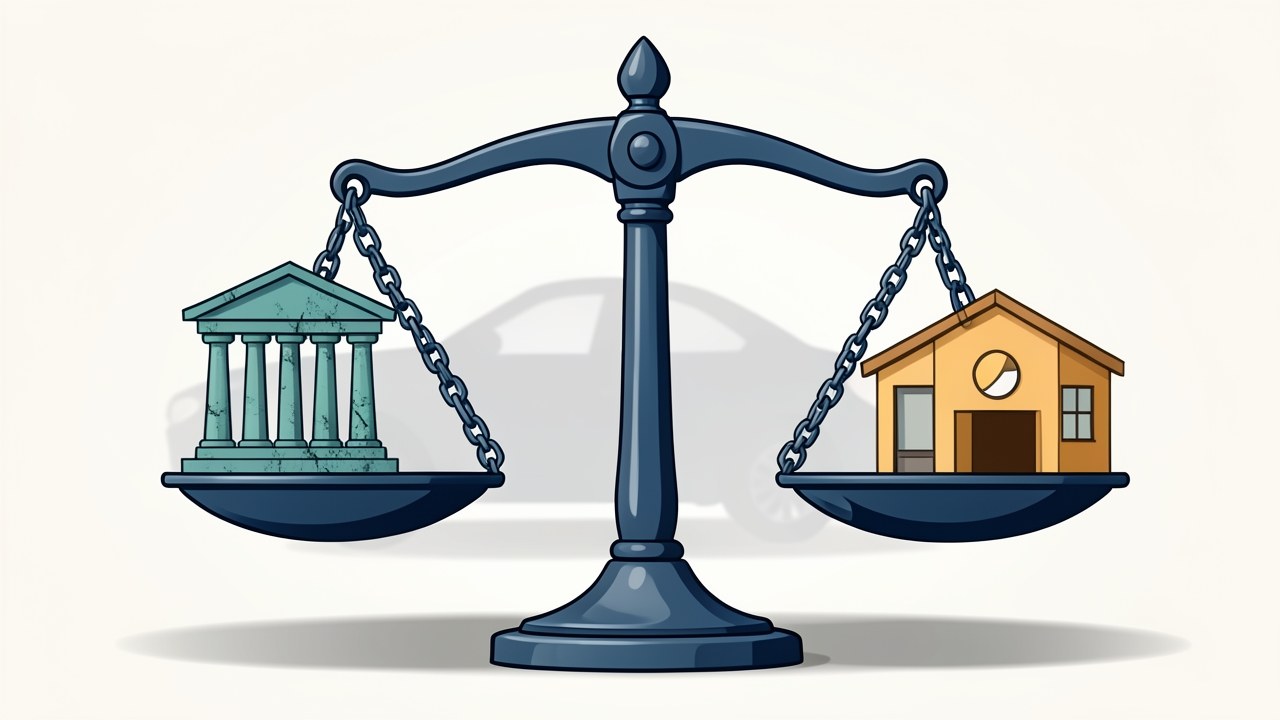
Types of Lenders
When you're ready to finance a car, you have several options for where to get the loan. The main types of auto loan lenders are credit unions, banks, online lenders, and dealerships. Each offers a different combination of interest rates, fees, and conveniences.
Your choice of lender can significantly impact both the cost of your loan and your overall car-buying experience. Understanding how each type operates helps you make an informed decision.
- Credit unions: member-owned, not-for-profit cooperatives that often offer lower rates.
- Banks: for-profit institutions with extensive branch networks and competitive rates for strong credit.
- Online lenders: digital-first companies offering quick approvals and sometimes lower credit requirements.
- Dealership financing: indirect financing arranged through the dealer, often with added markup but occasional promotional offers.
Comparison Criteria
To compare lenders effectively, focus on several key factors: interest rates, fees, flexibility, and credit requirements. Interest rates directly affect your monthly payment and total interest paid. Fees can add hundreds of dollars to the loan cost. Flexibility includes options for loan terms, refinancing, and early repayment. Credit requirements determine which lenders you'll qualify with and at what rate.
Use your credit score and personal financial situation as a baseline. Lenders advertise starting rates that apply to well-qualified buyers; your actual rate will depend on your specific credit profile and the loan terms you select.
- Interest rate: the cost of borrowing, expressed as an APR or annual percentage rate, which includes fees and other costs.
- Fees: origination fees, documentation fees, prepayment penalties, and late payment fees can vary by lender.
- Flexibility: loan term lengths, ability to refinance, and prepayment policies.
- Credit requirements: minimum credit score and income thresholds.
- Customer experience: branch access, online tools, and customer support.
Sources: Consumer Financial Protection Bureau
Banks
Banks are for-profit financial institutions that offer auto loans as part of their broader lending services. They typically have extensive branch networks, which can be convenient for customers who prefer in-person service. Banks often provide competitive interest rates for borrowers with strong credit scores, and some offer relationship discounts for existing customers.
For example, Bank of America starts at 5.19% APR and Chase at 5.99% APR for a 60-month new car loan. These rates are attractive but may be higher than those from credit unions, especially for borrowers with excellent credit.
- Large branch networks and full-service experience
- Rates often competitive for excellent credit
- May offer discounts for existing customers
Sources: LendingTree
Credit Unions
Credit unions are not-for-profit, member-owned cooperatives. Because they don't aim to maximize profits, they often pass savings on to members in the form of lower interest rates on loans, including auto loans. Credit union membership is typically limited to people who share a common bond, such as working for a certain employer or living in a specific community, but membership requirements are often easy to meet.
For example, PenFed Credit Union starts at 3.39% APR and SFCU at 3.50% APR for a 60-month loan. These rates are notably lower than many banks, making credit unions a popular choice for auto financing.
- Lower average rates compared to banks
- Member-owned and not-for-profit
- Often more personalized customer service
Sources: LendingTree, Bankrate
Online Lenders
Online lenders operate entirely on the internet, offering a streamlined application process and quick approval decisions. These lenders vary widely in the credit profiles they serve; some, like Autopay, accept borrowers with credit scores as low as 580, while others, like LightStream, target those with good to excellent credit.
The convenience of applying online and receiving funds quickly is a major advantage. However, online lenders may lack in-person support, and you'll need to ensure they are reputable and licensed in your state.
- Apply entirely online with fast approval
- Some accept borrowers with lower credit scores (e.g., Autopay min 580)
- Rates can be competitive, but vary widely by lender
Sources: LendingTree
Dealership Financing
Dealership financing, also known as dealer-arranged or indirect financing, involves the dealer acting as an intermediary between you and a lender. The dealer submits your application to a network of banks, credit unions, or other finance companies and presents you with the offers you qualify for. This can be convenient because you can shop for a car and arrange financing in one place.
However, the interest rate offered through the dealership is often the lender's 'buy rate' plus an additional markup that compensates the dealer for arranging the loan. This means dealership financing is typically more expensive than direct lending from a bank or credit union. On the other hand, dealers may occasionally offer promotional financing, such as 0% APR, on new vehicles for buyers with excellent credit. These offers are usually only available for limited times and may require a strong credit profile.
- One-stop shopping at the dealership
- Rates often include a markup added by the dealer
- Promotional offers like 0% APR may be available for well-qualified buyers
- Preapproval from another lender can help you negotiate a better rate
Sources: Consumer Financial Protection Bureau, Experian
How to Choose a Lender
Choosing the right lender depends on your credit score, financial situation, and preferences. Start by checking your credit score and reviewing your budget. Then, compare offers from at least one bank, one credit union, and one online lender. Getting preapproved by a bank or credit union before visiting a dealership gives you a benchmark and can be used to negotiate a better deal with the dealer.
Consider not only the interest rate but also the total cost of the loan, including fees and the length of the term. A lower rate on a longer term may result in a higher total interest cost. Use the lender's offer as a starting point, and don't be afraid to negotiate, especially if you have a preapproval from another institution.
- Check your credit score before applying
- Get preapproved with a direct lender (bank or credit union)
- Compare offers from multiple lender types
- Review the loan agreement carefully for fees and terms
Sources: Consumer Financial Protection Bureau
Lender Comparison at a Glance
The table below summarizes the key characteristics of the main lender types, based on information from the Consumer Financial Protection Bureau, Experian, LendingTree, and Bankrate as of August 2026.
| Option | Category | Key Advantage |
|---|---|---|
| Credit Unions | Lender Type | Often offer lower rates due to not-for-profit status |
| Banks | Lender Type | Full-service experience, large branch networks |
| Online Lenders | Lender Type | Convenience, some accept lower credit scores (e.g., Autopay min 580) |
| Dealership Financing | Lender Type | Convenience of one-stop shopping; can offer promotional financing |
Sources: LendingTree, Bankrate, Consumer Financial Protection Bureau, Experian
Frequently asked questions
Are credit unions better than banks for car loans?
Credit unions often offer lower interest rates on car loans compared to banks because they are not-for-profit and member-owned. However, the best choice depends on your credit score and the specific offers you receive, so it's wise to compare quotes from both types of lenders.
Sources: LendingTree, BankrateCan I get a car loan from an online lender?
Yes, many online lenders offer car loans. They provide the convenience of applying online and often have quick approval times. Some, like Autopay, accept borrowers with credit scores as low as 580, while others, like LightStream, target those with good or excellent credit. Rates vary widely depending on your creditworthiness and the lender.
Sources: LendingTreeIs dealership financing always more expensive?
Dealership financing is often more expensive because the dealer may add a markup to the lender's rate, increasing your interest costs. However, dealerships sometimes offer promotional financing, such as 0% APR, for new vehicles if you have excellent credit. It's not always more expensive, but you should compare the dealer's offer with preapproval from a bank or credit union to ensure you're getting a competitive rate.
Sources: Consumer Financial Protection Bureau, ExperianWhat fees should I watch out for?
Common fees in auto loans include origination fees, documentation fees, and prepayment penalties. Dealerships may also charge administrative fees. Some lenders may waive certain fees for good credit. It's important to read the loan agreement carefully and ask about any fees before signing.
Sources: Consumer Financial Protection BureauSources
- What are the different ways to buy or finance a car or vehicle? — Consumer Financial Protection Bureau
- What Are the Different Types of Car Loans? — Experian
- Auto loans key terms — Consumer Financial Protection Bureau
- Best Auto Loan Rates in August 2026 — LendingTree
- Auto Loan Rates & Financing in 2026 — Bankrate