Why Down Payment Matters
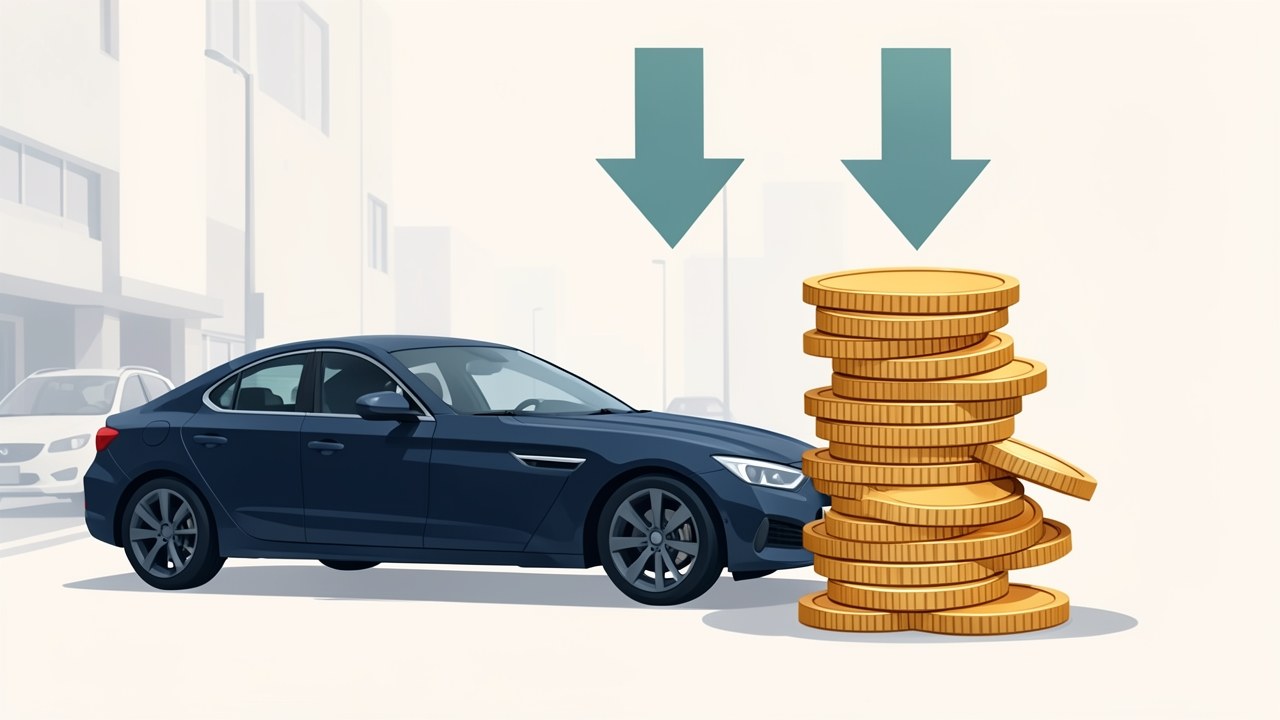
A down payment is your initial, upfront payment toward the total cost of a vehicle. It directly reduces the amount you need to finance, which means you borrow less and pay interest on a smaller balance. That simple shift can have a big impact on your monthly budget and the total cost of the loan.
Beyond lowering your loan amount, a substantial down payment can also improve the terms a lender offers you, including the interest rate. Lenders see a larger down payment as a sign of lower risk because you have more equity in the car from day one.
- Reduces the loan amount, so your monthly payment drops.
- Lowers the total interest you pay over the life of the loan.
- May lead to a lower interest rate and better loan conditions.
- Helps you avoid being “upside-down,” owing more than the car is worth.
Sources: Consumer Financial Protection Bureau, SoFi
How Down Payment Affects Loan Amount and Monthly Payment
The size of your down payment directly changes the loan principal. A larger down payment means you finance less, which lowers your monthly payment and the total interest you'll pay. Even a small increase can make a noticeable difference over a 60-month term.
Consider a $35,000 car with a 4% interest rate over 60 months. Put down $5,000, and your payment drops to $552 and total interest to $3,150. Increase the down payment to $10,000, and the payment falls to $460 with total interest of just $2,625.
Sources: SoFi, NerdWallet
How Down Payment Can Influence Interest Rate
A larger down payment can reduce the interest rate on your car loan, though it's not guaranteed. Lenders consider the loan-to-value (LTV) ratio—the percentage of the car's price you're financing. A lower LTV, which comes with a bigger down payment, is seen as less risky, so lenders may reward you with a lower APR.
For example, financing a $30,000 car at 8% interest over 60 months with no down payment results in a $608 monthly payment. While this example doesn't show a rate change, the lower LTV can improve your chances of qualifying for a better rate.
Improving your LTV also reduces the lender's risk, which can lead to more favorable loan terms overall.
Sources: Consumer Financial Protection Bureau, SoFi, Navy Federal Credit Union, Preston Ford of Keller
Recommended Down Payment Amounts
Financial experts generally recommend a down payment of at least 20% for a new car and at least 10% for a used car. These are guidelines, not hard requirements, but they provide a solid buffer against depreciation and help you avoid negative equity.
Using recent average prices: a new car costs about $48,000, so a 20% down payment is roughly $9,600. A used car averages over $25,000, making a 10% down payment about $2,500. These levels put you in a stronger position when negotiating your loan.
Sources: NerdWallet, Preston Ford of Keller
Zero-Down Financing: Pros and Cons
Zero-down financing lets you drive away without an upfront payment, but it comes with trade-offs. With no down payment, you'll have a higher monthly payment and pay more in total interest over the life of the loan.
However, zero-down can be a viable option if you need a car immediately and have strong credit to secure a low rate. The catch is that you're more likely to be upside-down on the loan, meaning you owe more than the car is worth, especially if you choose a long term.
- Pros: no upfront cash needed, allows you to buy a car sooner.
- Cons: higher monthly payments, more total interest, greater risk of negative equity.
Sources: SoFi, Preston Ford of Keller
How to Save for a Down Payment
Saving for a down payment takes planning, but the payoff is lower monthly payments and less interest paid over time. Start by setting a target amount based on the car price and your desired down payment percentage. Then, build a dedicated savings plan, such as automatically transferring a set amount each month into a separate account.
Before you save, check your budget to see what you can afford. Aim for a down payment that keeps your monthly payment within your comfort zone. Even a modest savings habit can add up to a meaningful down payment over a year or two.
- Decide on a target: 20% for new, 10% for used is a common benchmark.
- Set up automatic transfers to a separate savings account.
- Consider cutting discretionary expenses to accelerate your savings.
- Track your progress and adjust your timeline as needed.
Sources: NerdWallet
Frequently asked questions
Is a 20% down payment always necessary for a car loan?
No, a 20% down payment is not always necessary. It is a common guideline, but many lenders offer loans with smaller down payments or even none. The right amount depends on your budget, your credit, and the car's price.
Sources: NerdWalletCan I get a car loan with no down payment?
Yes, you can get a car loan with no down payment. Many lenders offer zero-down financing. However, this usually means higher monthly payments and more total interest paid over the life of the loan. It also increases the risk of being upside-down, especially if the car depreciates quickly.
Sources: SoFi, Preston Ford of KellerHow does a larger down payment affect my auto loan rate?
A larger down payment may lower your auto loan rate, though it's not guaranteed. It reduces the loan-to-value ratio, which lenders view as lower risk, and they may reward that with a lower interest rate or better terms. The effect can vary by lender and your credit profile.
Sources: Consumer Financial Protection Bureau, SoFiWhat is the minimum down payment required by most lenders?
There is no universal minimum down payment. Common recommendations are 20% for new cars and 10% for used cars, but these are guidelines, not requirements. Some lenders may have specific minimums, so it's best to check with them directly.
Sources: NerdWallet, Preston Ford of KellerDoes a down payment help if I have bad credit?
Yes, a down payment can help if you have bad credit. By reducing the loan amount and improving your loan-to-value ratio, a larger down payment lowers the lender's risk, which may make it easier to qualify for a loan and could lead to a better interest rate. It also reduces your monthly payment, making the loan more manageable.
Sources: SoFiSources
- How does a down payment affect my auto loan? — Consumer Financial Protection Bureau
- How Down Payment Amounts Affect Car Loans | SoFi — SoFi
- 5 Factors Affecting Your Monthly Car Loan Payment — Navy Federal Credit Union
- How Much Should My Car Down Payment Be? - NerdWallet — NerdWallet
- Should You Put A Down Payment On A Car? Pros & Cons – Preston Ford of Keller Blog — Preston Ford of Keller