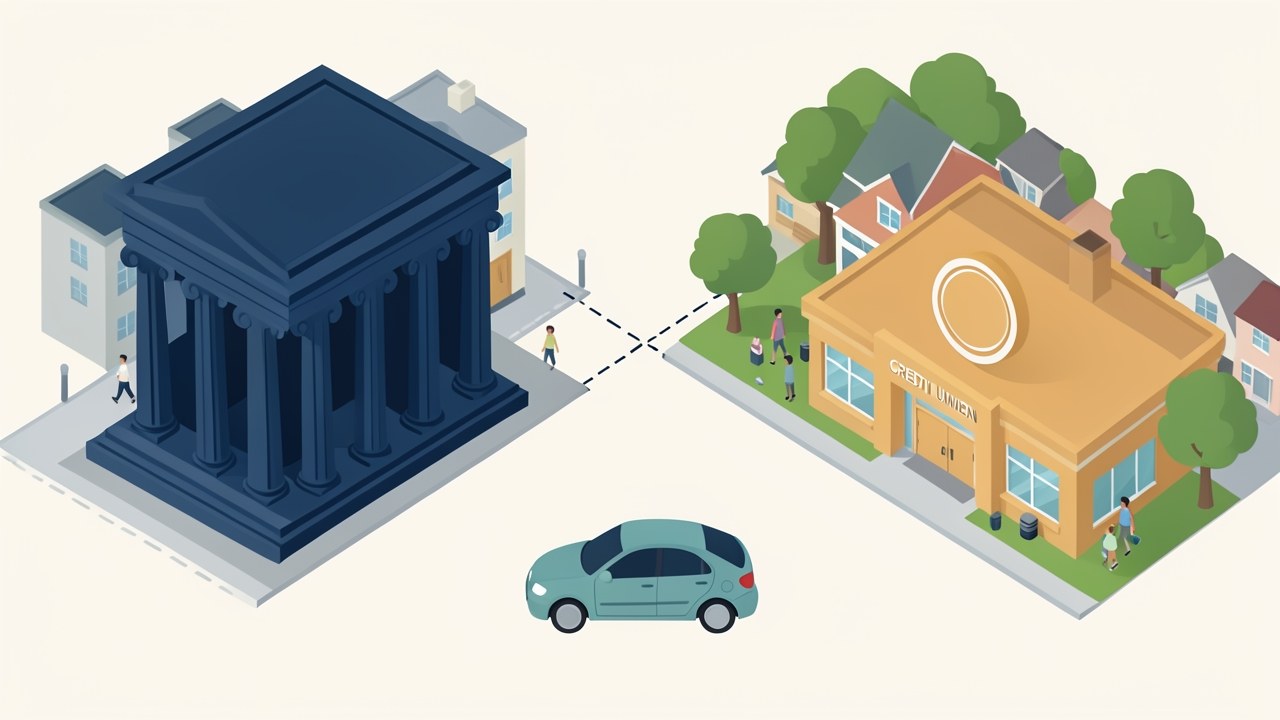
Overview of Credit Union Auto Loans
Credit unions are not-for-profit, member-owned cooperatives that return earnings to members in the form of lower rates and fees. Because they are not driven by profit, they often offer more favorable auto loan terms than traditional banks.
To get a loan from a credit union, you must first become a member. Membership typically requires meeting eligibility criteria, such as living in a specific area, working for a particular employer, or belonging to an affiliated organization. Some credit unions allow you to join through associations that anyone can join, often requiring only a small deposit (commonly $5) to open a savings account.
Credit unions are known for personalized customer service and a more holistic approach to underwriting. They may consider factors beyond your credit score, which can be beneficial if your credit history is less than perfect.
- Not-for-profit, member-owned structure
- Membership required, typically via employer, geographic area, or association
- Small initial deposit (e.g., $5) to join
- Personalized service and flexible credit requirements
Sources: Lendbuzz, Broadview Federal Credit Union, Heritage Financial Credit Union, People Driven Credit Union
Overview of Bank Auto Loans
Banks are for-profit institutions that offer auto loans to the general public. Unlike credit unions, they generally do not require membership, so you can apply for a loan even if you have no prior relationship with the bank.
Many banks offer streamlined digital applications and faster approval processes, with some providing same-day or next-day decisions. This can be convenient if you need financing quickly.
Their underwriting criteria often rely more heavily on credit scores, which can make approval harder for borrowers with less-than-ideal credit.
- For-profit structure
- No membership requirement
- Often faster approval (same-day or next-day)
- Common origination fees
- Stricter credit score thresholds
Sources: Lendbuzz, Broadview Federal Credit Union, Investopedia
Comparison of Rates and Fees
When comparing auto loans, it's important to consider not just the monthly payment but also the APR, interest rate, loan term, and total amount financed. These factors determine the total cost of the loan.
According to data from the NCUA, as of Q2 2024, the average interest rate for a 60-month new-car loan was 6.36% at credit unions versus 7.39% at banks. For a 48-month used-car loan, the average was 6.42% at credit unions and 7.69% at banks. More broadly, credit unions can offer rates approximately 1% to 2% lower than banks on average.
Fee structures also differ. Credit unions often waive origination fees, whereas banks commonly charge them. Prepayment penalties are rare at credit unions, but they vary by institution at banks.
- Credit unions typically offer 1-2% lower APRs than banks.
- Average rates (Q2 2024): 60-month new car: 6.36% credit union vs. 7.39% bank; 48-month used car: 6.42% vs. 7.69%.
- Prepayment penalties: rare at credit unions, vary at banks.
| Option | Category | Typical Interest Rate Advantage | Membership Requirement | Business Model | Typical Approval Speed |
|---|---|---|---|---|---|
| Credit Union | Auto Loan Lender Type | 1-2% lower than banks on average | Required | Not-for-profit, member-owned | May be slower, up to 1 business day |
| Bank | Auto Loan Lender Type | Generally higher than credit unions | None | For-profit | Faster, often same-day or next-day |
Sources: Lendbuzz, Broadview Federal Credit Union, Investopedia, Heritage Financial Credit Union, People Driven Credit Union
Membership and Eligibility Differences
The most significant barrier to a credit union auto loan is membership. To apply, you must first become a member. Eligibility criteria vary by credit union, but common requirements include living in a specific area, working for a particular employer, or belonging to an affiliated organization. Some credit unions allow membership through associations that anyone can join, and you must become a member before applying for a loan.
Banks, on the other hand, do not require membership. You can apply for an auto loan with any bank, regardless of your location or employer. This makes banks more accessible if you prefer to shop around without the initial step of joining a financial institution.
This is usually a straightforward process, but it does add an extra step compared to applying with a bank.
- Credit unions: membership required; eligibility based on location, employer, or association
- Banks: no membership required
- Credit unions often require a small savings deposit (e.g., $5)
Sources: Lendbuzz, People Driven Credit Union, Investopedia
Application Process and Approval Speed
Banks generally offer more streamlined digital applications and faster approval processes, with many providing same-day or next-day decisions. This can be a major advantage if you need financing quickly or want to avoid lengthy paperwork.
Credit unions, particularly smaller ones with less automated underwriting, may have slower approval processes. However, this is not universal, and many credit unions now offer online applications with quick turnarounds. It's best to check with your specific credit union for their typical processing times.
Regardless of the lender type, it's wise to get pre-approved before visiting a dealership. This helps you understand your budget and strengthens your negotiating position. The CFPB notes that you are not required to get an auto loan through a dealership; you can get quotes from banks or credit unions before shopping for a car.
- Banks often provide same-day or next-day approval.
- Credit unions may take up to 1 business day or longer, depending on the institution.
- Get pre-approved from multiple lenders to compare offers.
Sources: Consumer Financial Protection Bureau, Lendbuzz, Investopedia
Customer Service and Flexibility
Credit unions are often praised for personalized customer service, with a focus on building relationships with members. They tend to be more flexible in their lending criteria, considering factors beyond just your credit score, such as your overall financial picture.
Banks, especially large national ones, may feel more impersonal, and their service can vary widely by branch and account type. However, some banks offer relationship discounts for existing customers, which can reduce the rate gap with credit unions.
Flexibility also extends to loan terms. Banks typically offer a wider variety of loan terms (from 24 to 84 months or longer) and may be more flexible on vehicle age and mileage. Some credit unions restrict loans to newer vehicles or cap the loan term on older cars.
Credit unions often participate in shared branching networks, giving members access to thousands of locations nationwide. This can offset the potential inconvenience of having fewer physical branches.
- Credit unions: personalized, community-focused service
- Banks: service may vary; relationship discounts possible
- Credit unions may have more flexible credit requirements
- Banks may offer more loan term variety; credit unions may limit terms on older vehicles
- Shared branching at credit unions provides expansive network access
Sources: Lendbuzz, Heritage Financial Credit Union, People Driven Credit Union, Wright-Patt Credit Union
How to Make the Right Choice
Choosing between a credit union and a bank for your auto loan depends on your personal situation. If you already belong to a credit union or can easily meet eligibility requirements, the lower rates and potential fee savings make it an attractive option. However, you must weigh the membership requirement and possibly slower approval.
If you value speed and convenience, or you don't want to go through the membership process, a bank might be more suitable. Just be prepared for potentially higher rates and fees.
Regardless of your choice, it's essential to compare offers from multiple lenders. Look at the APR, loan term, and total cost, not just the monthly payment. Remember that lenders base your rate on factors like your credit score, income, debts, and down payment. Get personalized quotes from a few credit unions and banks to see which offers you the best deal.
- Assess your eligibility for credit union membership.
- Consider the importance of fast approval and digital convenience.
- Compare APRs, fees, and loan terms from multiple lenders.
- Use pre-approval to strengthen your negotiating position.
Sources: Consumer Financial Protection Bureau, Lendbuzz, Investopedia
Evidence-backed comparison matrix
The table above provides a side-by-side comparison of typical attributes of credit unions and banks for auto loans. While this information is based on industry data and expert sources, individual institutions can vary. Always check with the specific lender to confirm their rates, fees, and policies.
Frequently asked questions
Are credit unions always cheaper than banks for car loans?
Credit unions generally offer lower interest rates and are more likely to waive origination fees, but they are not always cheaper. Rates vary by institution and your credit profile. Some banks offer relationship discounts that can narrow the gap, so it's important to compare quotes from both.
Sources: Lendbuzz, Broadview Federal Credit Union, InvestopediaCan I join a credit union just for an auto loan?
Yes, you can join a credit union solely to obtain an auto loan. You'll need to meet the credit union's eligibility criteria, which might include living in a certain area, working for a specific employer, or joining an affiliated association. Typically, you'll open a savings account with a small deposit (e.g., $5) to become a member.
Sources: Lendbuzz, People Driven Credit UnionDo banks or credit unions have better customer service?
Credit unions are often known for more personalized, community-focused service, while large banks may feel less personal. However, service quality varies by individual institution. Some banks offer relationship managers and digital tools that some borrowers may prefer.
Sources: Lendbuzz, Heritage Financial Credit UnionWhat is the easiest way to get approved for an auto loan?
The easiest way to get approved depends on your credit and financial situation. Credit unions often have more flexible credit requirements, considering your overall financial picture, which can make approval easier if you have less-than-perfect credit. Banks may have stricter score thresholds but may offer faster decisions. Pre-approval from a lender can help you understand your options.
Sources: Lendbuzz, Broadview Federal Credit Union, People Driven Credit UnionSources
- How do I compare auto loan offers? — Consumer Financial Protection Bureau
- How does a lender decide what interest rate to offer me on an auto loan? — Consumer Financial Protection Bureau
- Am I required to get my auto loan through a dealership? — Consumer Financial Protection Bureau
- Bank Vs Credit Union Auto Loan: What's Smarter in 2026? — Lendbuzz
- Auto Loans: Credit Unions vs. Banks — Broadview Federal Credit Union
- Comparing Auto Loan Options: Credit Union vs. Bank — Heritage Financial Credit Union
- Why Credit Unions offer Better Auto Loans — People Driven Credit Union
- Credit Union vs. Bank for Auto Loan: What's the Best Choice? — Investopedia
- Are Credit Union Auto Loans Cheaper Than Bank Auto Loans? — Wright-Patt Credit Union